Something significant is shifting in how large organisations think about office space. Enterprises that once anchored themselves to sprawling headquarters on decade-long leases are increasingly opting for something more nimble, and the reasons go well beyond cost-cutting.
The rise of hybrid work has fundamentally changed what businesses need from their physical spaces. With teams no longer following a rigid five-days-a-week pattern, committing to a fixed, oversized office for ten years is starting to look less like a smart investment and more like an unnecessary liability.
The Long-Term Lease Problem
Traditional office leases were built for a different era of work. They assumed stable headcounts, predictable growth trajectories, and a workforce that showed up at the same desk, in the same building, every single day. For many enterprises, that reality no longer exists.
When organisations lock themselves into long leases, they take on significant financial risk. If the team shrinks, the market shifts, or the business pivots, they are still on the hook for every square foot of space they signed for. Factor in fit-out costs, reinstatement obligations, and the administrative weight of managing a large standalone office, and the true cost of a traditional lease becomes considerably steeper than the headline rent figure suggests.
Why Flex Space Makes Sense for Enterprises
The appeal of flexible office space for larger organisations is no longer just about saving money. It is about gaining the kind of agility that the modern business environment demands.
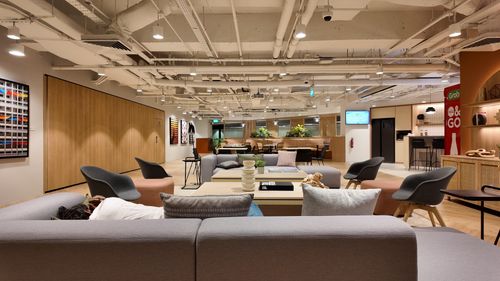
When you rent an office through a coworking provider, you are not simply paying for a room. You are accessing a fully managed, professionally equipped environment that includes meeting rooms, business lounges, reception services, and high-speed connectivity, without the overhead of running it yourself. For enterprises, that operational simplicity translates into real savings in time and management bandwidth.
Flex space also allows businesses to right-size continuously. Need to add a team of ten for a six-month project? Scale up. Restructuring and reducing headcount? Scale back. This kind of responsiveness simply is not possible within a traditional lease structure, and in fast-moving industries, that flexibility can be a genuine competitive advantage.
Hybrid Work and Flexible Workspaces: A Natural Fit
The relationship between hybrid work and flexible workspaces has become one of the defining dynamics of the post-pandemic office market. Enterprises have broadly accepted that their people will not all be in the office at the same time, every day. The question now is how to design a workspace strategy that reflects that reality without wasting resources.
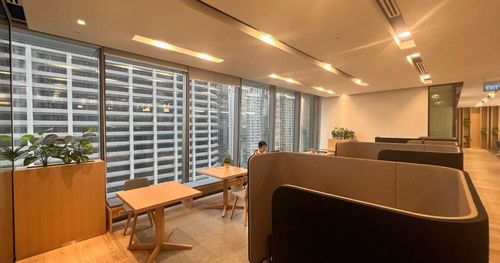
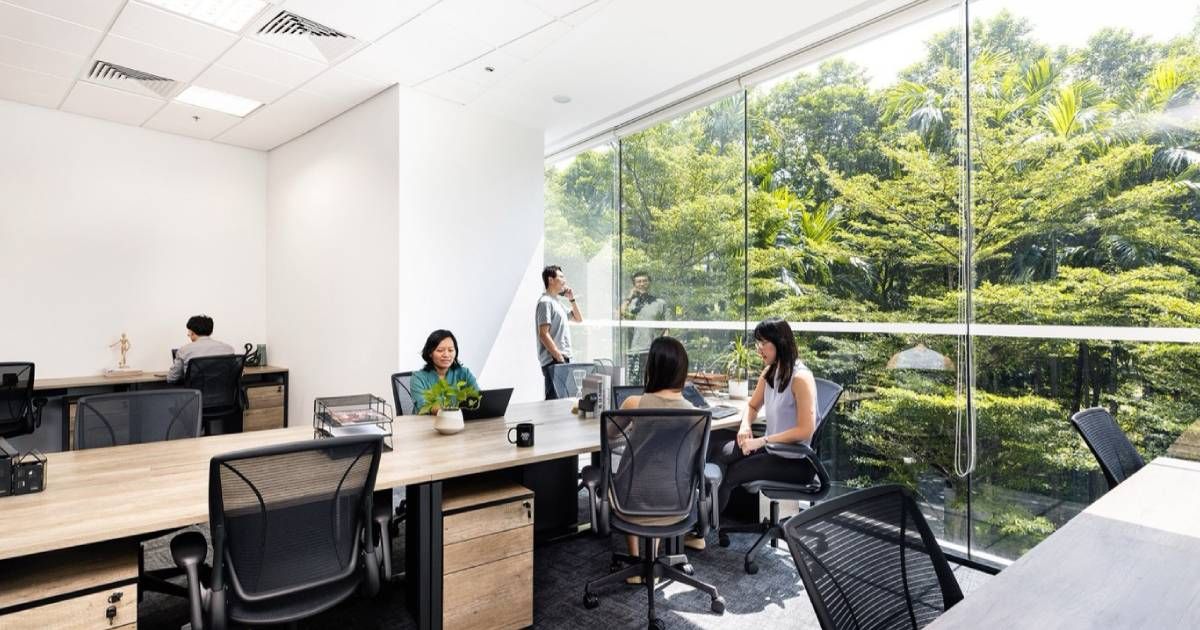
Flex space providers are well-placed to answer that question. A company might maintain a smaller private office within a coworking environment as a consistent home base, while also giving employees access to hot desks or dedicated desks at multiple locations across the city. This distributed model supports hybrid schedules far more naturally than a single large office can.
For multinational enterprises in particular, the ability to spin up workspace in a new market quickly, without the legal and logistical burden of a standalone lease, is enormously attractive. Singapore's CBD, for instance, hosts a number of premium coworking providers that cater specifically to this kind of regional expansion need.
What Enterprises Are Actually Looking For
It would be a mistake to assume that enterprises moving to flex space are lowering their standards. If anything, the expectations are higher. Large organisations evaluating flexible workspace solutions typically care about:
- Professionalism and presentation: The space needs to reflect the brand and meet the expectations of senior stakeholders and external clients
- Privacy and security: Dedicated, enclosed offices with appropriate data and physical security measures are non-negotiable for many industries
- Scalability: The ability to grow within the same provider or ecosystem, without disrupting operations
- Location: A credible address in a recognised business district remains important for client-facing teams
The good news is that leading coworking providers in Singapore's CBD have evolved to meet precisely these requirements. Private offices within coworking settings now routinely offer the kind of fit-out quality, discretion, and amenity that enterprise teams expect.
The Financial Logic Is Shifting
For finance teams and CFOs, the appeal of converting a fixed, long-term occupancy cost into a more variable, manageable expense is increasingly difficult to ignore. Traditional leases sit on the balance sheet as liabilities. Flexible arrangements, by contrast, offer more predictable short-term costs and far greater control over future commitments.
As real estate becomes a line item that boards scrutinise more carefully, the pressure to justify large, underutilised office spaces is growing. Flex space gives enterprises a credible, professional answer to that scrutiny, without sacrificing the quality or location of their workspace.
The Bigger Picture
The shift from long-term leases to flexible office solutions is not a temporary trend driven by uncertainty. It reflects a genuine and lasting change in how enterprises think about work, space, and investment. The businesses leading this shift are not retreating from the office; they are reimagining it on their own terms, with more control, more flexibility, and less waste.
For large organisations still weighing their options, the question is no longer whether flex space can meet enterprise standards. In Singapore's CBD, it clearly can. The real question is how quickly your organisation is willing to adapt.
Make the Move with Tenant City
Transitioning away from a traditional lease can feel like a big shift, but finding the right flex space does not have to be complicated. Tenant City is designed to help enterprises cut through the noise, comparing private offices, dedicated desks, and other flexible solutions from leading coworking providers across Singapore's CBD, all in one place.
With straightforward information, unbiased guidance, and a team that understands the specific needs of larger organisations, Tenant City takes the guesswork out of your next workspace decision. Ready to explore what flexible office space can do for your business? Start with Tenant City.